

 Nederlands
 普通话
普通话 Deutsch
 Español
 Français
 Italiano
 日本語
日本語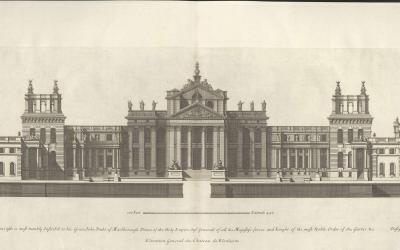
John Vanbrugh (1664-1726) was a brilliant, ambitious architect and dramatist whose bold vision shaped Blenheim Palace. The Palace was commissioned after the Duke of Marlboroughs 1704 victory at the Battle of Blenheim, Vanbrugh sought to create a monumental national symbol, but his genius was matched by fierce rivalries, political intrigue, and personal conflict.
The Rise of the Marlboroughs
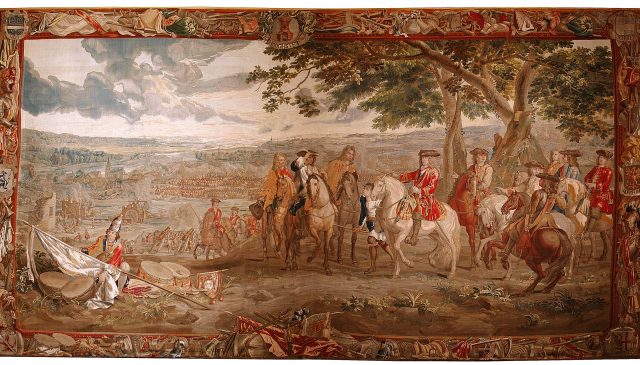
When John Churchill married Sarah Jennings in 1678, few could have predicted their meteoric rise to power. By the time Queen Anne ascended the throne in 1702, the Earl of Marlborough had become one of Britain's most influential figures. His decisive victory at Blenheim by the River Danube on the 13th August 1704 crushed Louis XIV's aura of invincibility and, as Sir Winston Churchill later wrote, 'changed the political axis of the world.'
Reaping the Rewards
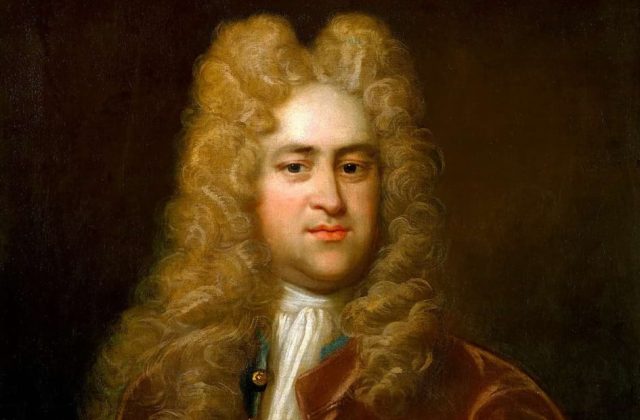
As a reward for this momentous victory, Queen Anne granted Marlborough the Manor and Honour of Woodstock and the Hundred of Wootton. A magnificent new house would be built as a lasting monument to his triumph. John Vanbrugh was chosen as architect, his outstanding work at Castle Howard having garnered considerable admiration. Unfortunately, the contract was never formalised - a decision that would later prove problematic.
The Building of Blenheim Palace
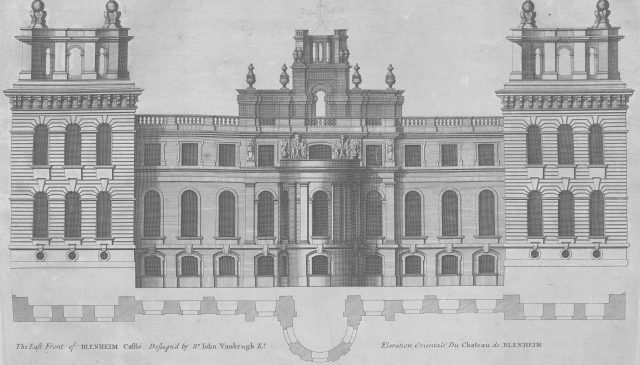
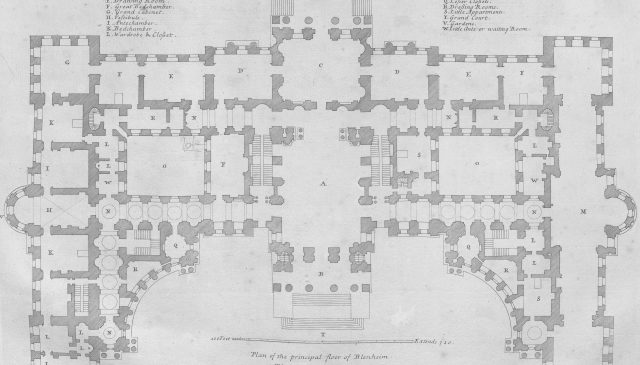
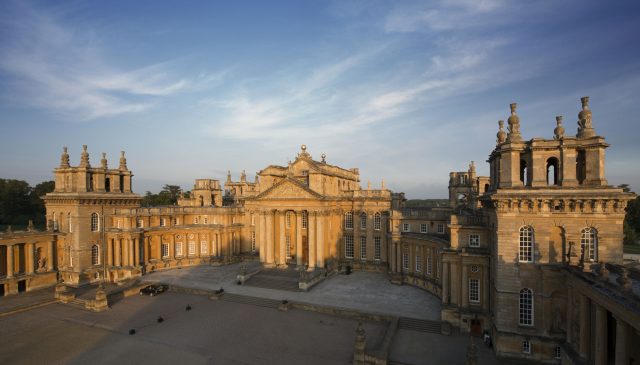
Vanbrugh's task was to create a suitable setting for a national hero who had beaten the French. The result is a style known as English Baroque, with size and scope to awe the viewer, together with mass ornamentation and symbolism to rival the Palace of Versailles. Working with Nicholas Hawksmoor, previously Sir Christopher Wren's assistant, he started on what was to become a monument, a castle and a private house - in that order...
A Fall from Favour
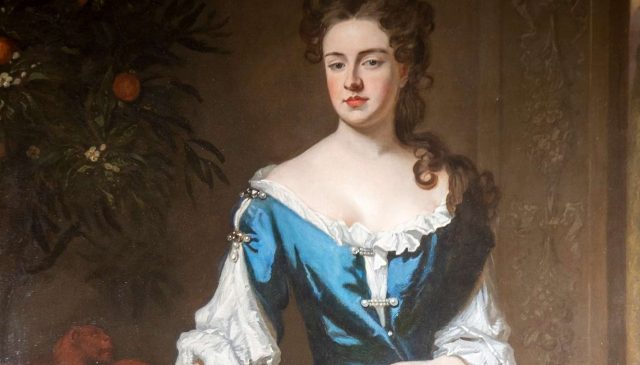
Building work continued for several years, funded by the Treasury. But by 1712, Sarah's relationship with Queen Anne had soured and Marlborough was besieged by political plotting. Their fall from favour was dramatic. Treasury payments for building Blenheim Palace were stopped, leaving Vanbrugh and others with £45,000 owing to them - about £4 million today. Unsurprisingly, all construction work ceased. The Marlboroughs lived abroad in self-imposed exile for the next two years until Queen Anne died on 1st August 1714. The Marlboroughs returned the next day.
Building Starts Again
When George I came to the throne, the Treasury paid the small debts in full, plus one third of the debts over ten pounds. But that was all. No more money was forthcoming for the completion of Blenheim Palace. There was nothing else left for Marlborough to do except finish the building at his own expense, continuing to use both Vanbrugh and Hawksmoor. In 1714, Vanbrugh's was one of the first knighthoods conferred by George I, apparently at Marlborough's request.
Building work started again in early 1716 - but with a difference. Marlborough refused to pay the rates that the Crown had previously paid. However, since many master craftsmen, such as the famous carver Grinling Gibbons, were still owed considerable sums of money by the Treasury, the inevitable result was that they refused to return. Foreman masons took over the work at the lower rates their masters had refused to accept.
Vanbrugh Leaves
By 1716, tensions between John Vanbrugh and Sarah, Duchess of Marlborough, had reached breaking point. Her fierce criticism of his designs led Vanbrugh to abandon the project in anger, complaining of her “intolerable treatment.” Nicholas Hawksmoor continued to oversee the work from afar, while day-to-day supervision passed to the skilled cabinet-maker James Moore, whom the Duchess trusted implicitly.
After the Duke of Marlborough’s death in 1722, Hawksmoor returned to complete key features, including the Triumphal Arch and other outworks. Vanbrugh, however, remained in permanent disgrace; in 1725 he was denied even entry to the park when he attempted to glimpse the Palace. He died the following year.
The inscription over the East Gate tells us that Blenheim Palace was built between 1705 and 1722 'under the auspices of a munificent sovereign'. However, the Treasury contributed only £240,000 to the initial cost of the building, while the Marlboroughs spent a further £60,000 completing it. In today's money, the £300,000 total cost was around £25 million.
Blueprints of Power
Want to learn more about the ambition, genius and rivalries of John Vanbrugh? Discover our Blueprints of Power exhibition starting on the 14th February Find out MoreNewsletter sign-up
Stay up to date with our latest news, offers and events by entering your details here...