

 Nederlands
 普通话
普通话 Deutsch
 Español
 Français
 Italiano
 日本語
日本語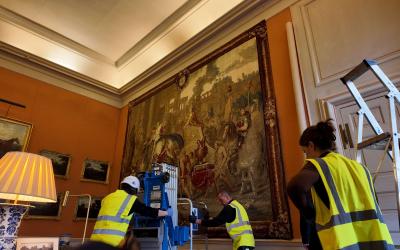
The conservation of The Triumphal Entry of Alexander into Babylon forms part of Blenheim Palace’s ongoing care for its internationally significant tapestry collection. Now undergoing specialist treatment by textile conservator Emma Telford, the work reflects the continued attention required to preserve these historic textiles while safeguarding their place within the Palace’s interiors. This latest project ensures the tapestry remains protected for the future, as part of the wider stewardship of Blenheim Palace’s artistic heritage.
The Art of Preservation at Blenheim Palace
At Blenheim Palace, preserving history is an ongoing commitment and this month marks an important milestone in the care of one of the Palace’s most treasured artworks.
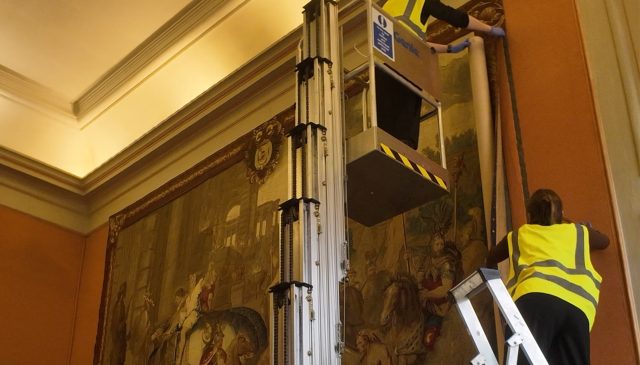
On the 15th May, the magnificent tapestry The Triumphal Entry of Alexander into Babylon was carefully removed from the Smoking Room within the Private Apartments to begin an extensive programme of specialist conservation treatment. The restoration is expected to take approximately one year and is being carried out by renowned textile conservator Emma Telford, who has worked on numerous tapestries throughout the Palace over the past decade.

A Masterpiece from the Alexander the Great Series
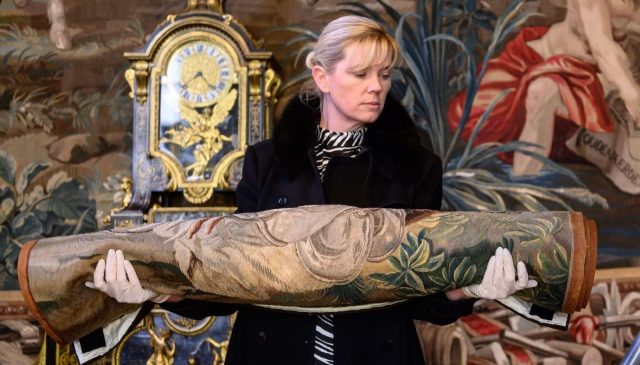
Part of the celebrated History of Alexander the Great series, the tapestry was commissioned in 1707 by 1st Duke of Marlborough and woven by Judocus de Vos. Although twelve tapestries were commissioned, only eight were ever completed, each depicting legendary moments from Alexander the Great’s military triumphs. Reflecting the artistic ambition of early 18th-century European tapestry production, the series remains an important part of Blenheim Palace’scollection, continuing to play a significant role in the Palace’s historic interiors.
The image shown features the Arabela Tapestry, another piece from the History of Alexander the Great series, offering a further glimpse into the craftsmanship of the collection.
Specialist Conservation Work Begins
The conservation project will focus on carefully preserving the tapestry for future generations through a series of specialist treatments designed to support both its structure and appearance.
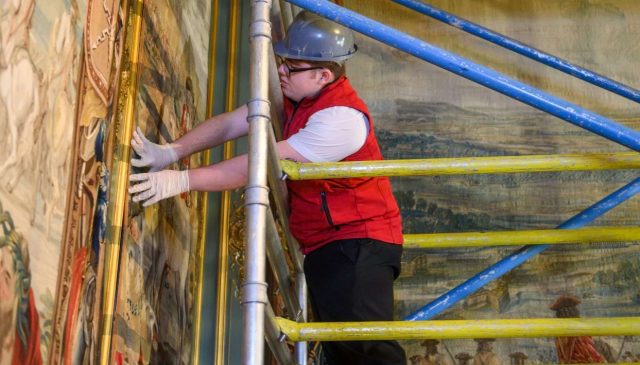
Work will include replacing the existing lining and updating the hanging system to Velcro, an effective method for supporting such a substantial historic textiles, reducing strain on the fabric.The tapestry will also undergo a surface clean on both sides using low-powered vacuum suction to remove accumulated dust and matter gathered over centuries of display. Additionally, the tapestry will receive full stitched support using Belgian linen scrim to help stabilise and protect the textile for years to come.
Completing a 20-Year Restoration Programme
This latest project marks an important milestone in Blenheim Palace’s long-running tapestry conservation programme, which has seen specialist restoration work carried out across the collection for more than 20 years. Undertaken with the support of specialist conservators, the work reflects a sustained commitment to the care, protection and long-term preservation of one of Britain’s most significant tapestry collections. These historic textiles form an important part of the Palace’s interiors and storytelling, and their ongoing conservation ensures they can continue to be appreciated by future generations.
Preserving Historic Textiles for Future Generations
This latest restoration follows the recent return of The Surrender of Lille, depicting the 1708 meeting between the Duke of Marlborough and French Marshal Boufflers during the War of the Spanish Succession. Through careful specialist treatment and long-term conservation planning, Blenheim Palace continues to safeguard these remarkable textiles, ensuring they remain protected, accessible and appreciated for many years to come. The continued investment in conservation reflects the Palace’s wider commitment to protecting its artistic and cultural heritage for future visitors and generations alike.
Newsletter sign-up
Stay up to date with our latest news, offers and events by entering your details here...