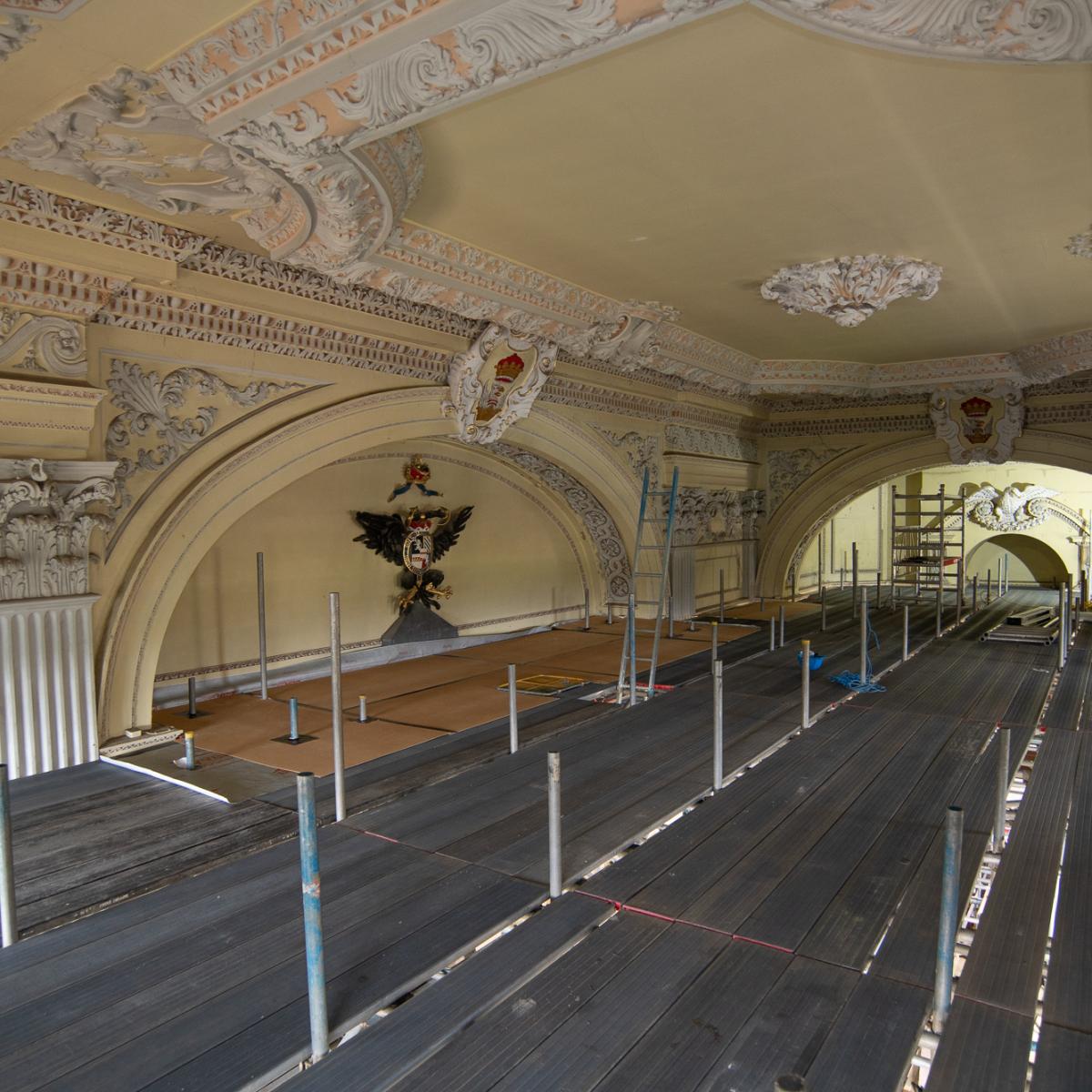
The final part of the project is the re-decoration. A traditional casein (milk based) paint is being applied; casein paint has been used since ancient Egyptian times. Casein paint dries to an even consistency and will unify and bond the residual modern and historic layers of paints, while retaining breathability, which is essential in this type of conservation.
We have analysed the layers of paint used over the years and the conservation team will decide on the perfect colour that will show the Chapel in its best light, whilst being historically accurate. The ceiling will be in a brighter white, which will reflect light and lift the whole space.
Historically the paint would have been mixed on site providing a slight difference in colour and tone between the layers. This is due to the application method and this process will be emulated by our Master Craftsmen.
The Chapel was altered from Vanbrugh’s original design, first by the 1st Earl of Godolphin in the early 18th century, who repositioned the high altar to the west. Other alterations took place in the 19th Century and all the furnishings that can be viewed today are Victorian additions.
The monument was created for the 1st Duchess as a tribute to her husband and the interior decoration remained plain to focus attention on this large monument. The Duke is portrayed as a victorious hero, dressed as a Roman general, with Sarah and their two sons who, sadly, had died young. Their four daughters are not in the family group.
The Chapel is still used by the Spencer-Churchill family for private services and ceremonies.


 Nederlands
 普通话
普通话 Deutsch
 Español
 Français
 Italiano
 日本語
日本語